Buy equalizers.eu ?
We are moving the project
equalizers.eu .
Are you interested in purchasing the domain
equalizers.eu ?
domain@kv-gmbh.de · 0541-91531010
Buy equalizers.eu ?
How can one control acceleration in physics?
Acceleration in physics can be controlled by adjusting the force applied to an object. According to Newton's second law of motion, acceleration is directly proportional to the net force acting on an object. By increasing or decreasing the force, one can control the acceleration of the object. Additionally, the mass of the object also plays a role in controlling acceleration, as a heavier object will require more force to achieve the same acceleration as a lighter object. **
How can one modify a scooter to achieve more acceleration?
To achieve more acceleration on a scooter, one can modify it in several ways. First, upgrading the scooter's engine by installing a high-performance carburetor, air filter, and exhaust system can improve acceleration. Additionally, changing the scooter's gearing by installing a smaller front sprocket or larger rear sprocket can also increase acceleration. Finally, upgrading the scooter's suspension and tires to improve traction and handling can help maximize acceleration. **

Similar search terms for Acceleration
Top-Angebote
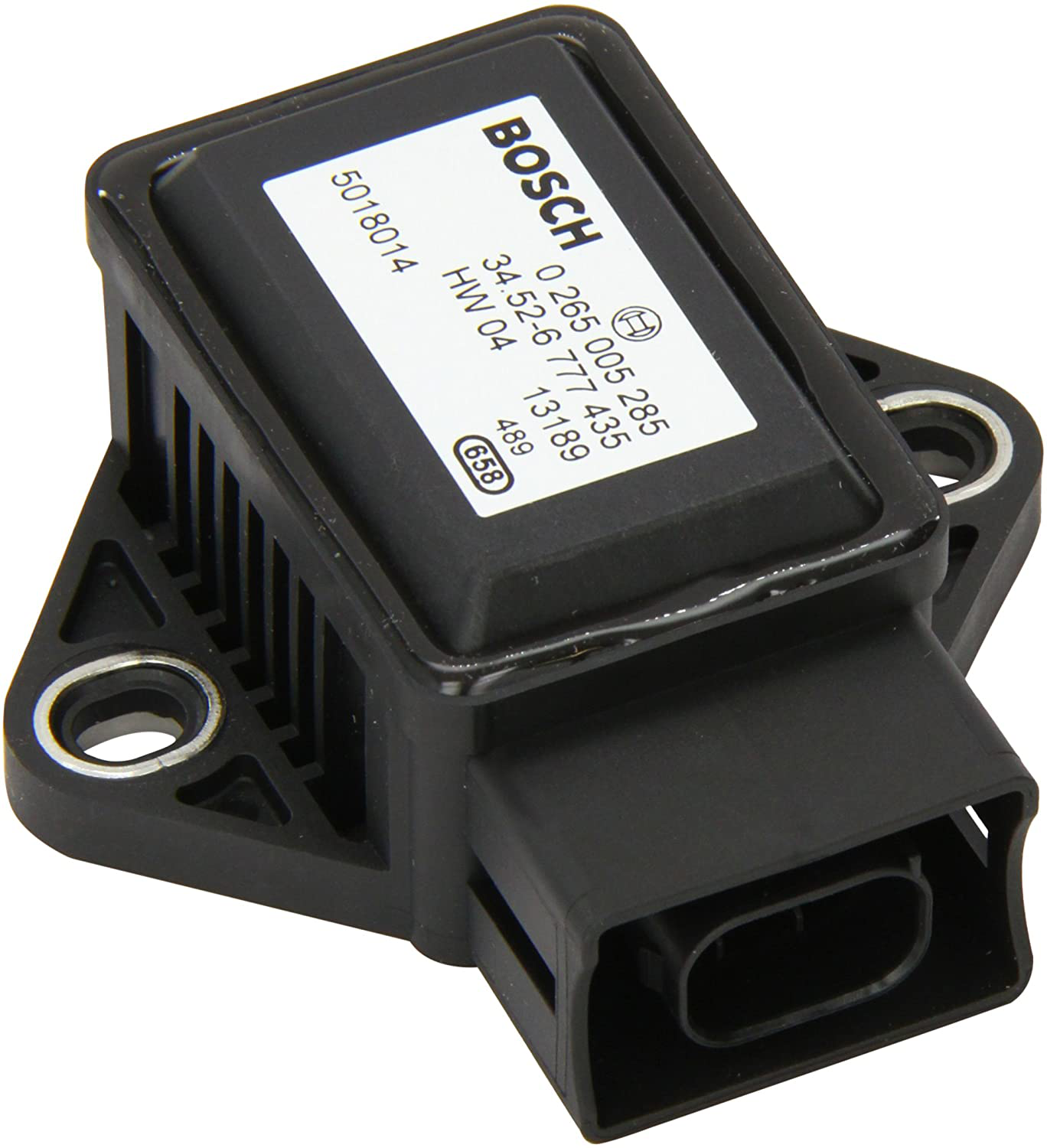
Products related to Acceleration:
-
METZGER 09001553 Sensor, longitudinal- / lateral accelerationFitting Position: lateral installation; Fitting Position: C-Pillar, Rear, Front, B-Pillar, Front and Rear; Sensor Type: Crash Sensor; Airbag: for side airbag; Production date from: 26.05.2014, 03.11.2014, 25.05.2015; Number of Doors: 4; for PR number: 4X1, 0A2; Production date to: 03.02.202060,99 £*Shipping: 8,45 £Secure redirect to the provider




-
How can one convert acceleration to Earth acceleration?
To convert acceleration to Earth acceleration, one can use the formula: Earth acceleration = acceleration / 9.81 m/s^2. This formula is derived from the fact that Earth's gravitational acceleration is approximately 9.81 m/s^2. By dividing the given acceleration value by 9.81 m/s^2, one can determine how many times greater or smaller the acceleration is compared to Earth's gravitational acceleration. This conversion is useful for comparing accelerations in different contexts to the standard acceleration due to gravity on Earth. **
-
How can one convert acceleration to Earth's acceleration?
To convert acceleration to Earth's acceleration, one can simply divide the given acceleration by the acceleration due to gravity on Earth, which is approximately 9.81 m/s^2. This will give the acceleration in terms of how many times Earth's gravity it is. For example, if a car is accelerating at 5 m/s^2, dividing this by 9.81 m/s^2 will give approximately 0.51 g, where g represents Earth's acceleration due to gravity. **
-
What is the difference between gravitational acceleration and Earth's acceleration?
Gravitational acceleration is the acceleration experienced by an object due to the force of gravity, which is approximately 9.81 m/s^2 on the surface of the Earth. Earth's acceleration, on the other hand, refers to the acceleration of the Earth itself as it orbits the Sun, which is approximately 9.81 m/s^2 towards the Sun. In essence, gravitational acceleration is the acceleration experienced by objects on Earth due to gravity, while Earth's acceleration is the acceleration of the Earth as it moves through space. **
-
What is the difference between tangential acceleration and rotational acceleration?
Tangential acceleration is the acceleration of an object moving in a circular path, and it is directed along the tangent to the path. It is caused by a change in the object's speed or direction. On the other hand, rotational acceleration is the rate of change of angular velocity of an object rotating around an axis. It is caused by a torque or force acting on the object, and it is directed perpendicular to the plane of rotation. In summary, tangential acceleration is related to linear motion in a circular path, while rotational acceleration is related to the change in the rate of rotation of an object. **

What is the formula for acceleration in uniform acceleration in physics?
The formula for acceleration in uniform acceleration in physics is given by a = (v - u) / t, where a is the acceleration, v is the final velocity, u is the initial velocity, and t is the time taken. This formula represents the change in velocity over time, and it is used to calculate the rate at which an object's velocity is changing. Acceleration is measured in meters per second squared (m/s^2). **
Is fuel consumption higher with cruise control than with intermittent acceleration?
Fuel consumption is generally lower with cruise control than with intermittent acceleration. Cruise control helps maintain a consistent speed, which can lead to more efficient fuel usage compared to the fluctuations in speed that occur with intermittent acceleration. By keeping a steady pace, cruise control can help optimize fuel efficiency and reduce overall consumption. **
Top-Angebote
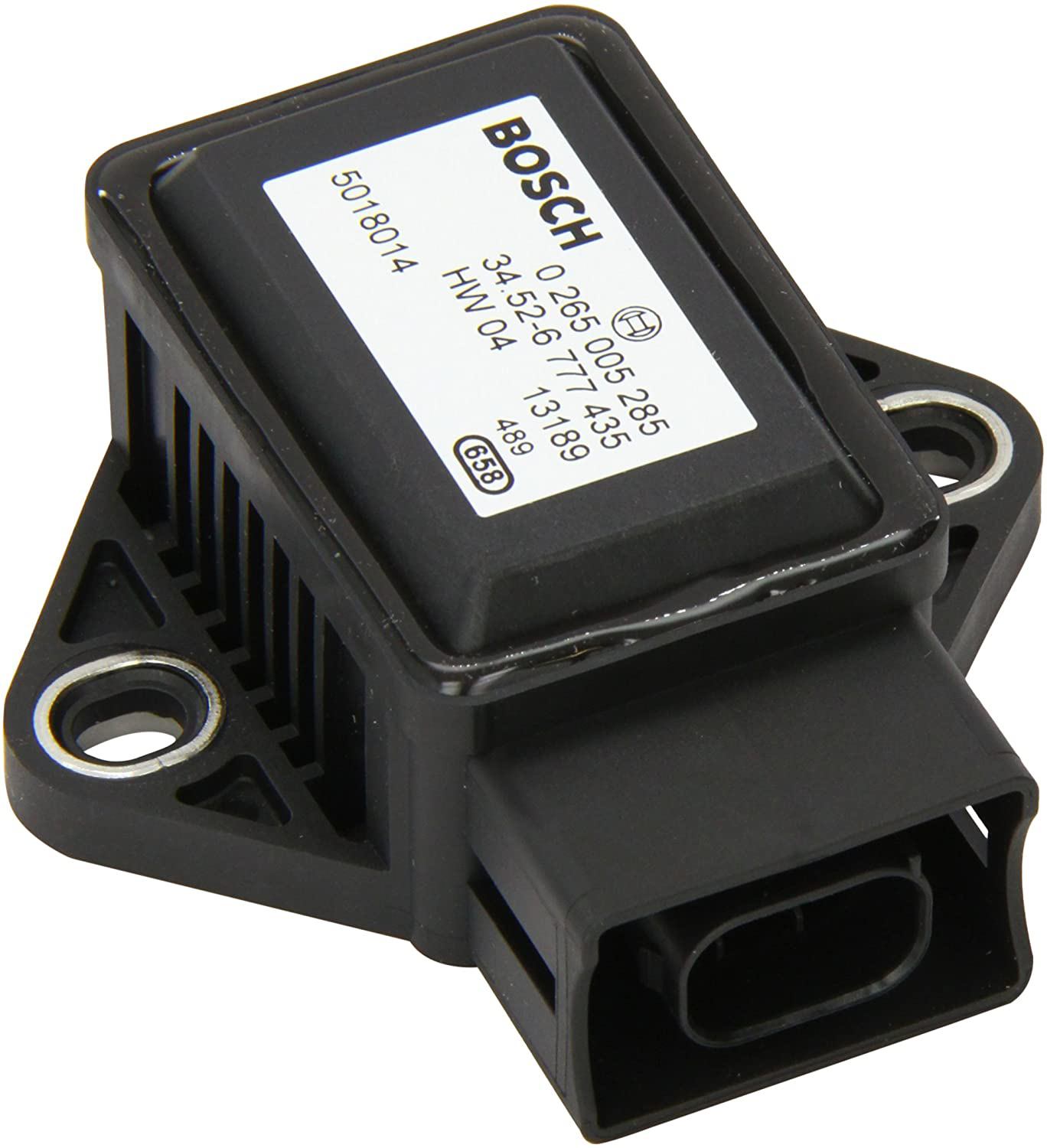
Products related to Acceleration:
-
METZGER 09001552 Sensor, longitudinal- / lateral accelerationFitting Position: lateral installation; Fitting Position: Front and Rear, C-Pillar, Rear, Front; Sensor Type: Crash Sensor; Airbag: for side airbag; for PR number: 4X1, 4X3, 0A2; Production date from: 31.05.2010; Production date to: 26.05.2014, 03.11.2014, 03.02.2020, 01.06.2020, 30.11.2015; Model Year to: 2014; Number of Doors: 4; Vehicle Identification Number (VIN) from: 2K-B-200 00160,99 £*Shipping: 8,45 £Secure redirect to the provider
-
METZGER 09001553 Sensor, longitudinal- / lateral accelerationFitting Position: lateral installation; Fitting Position: C-Pillar, Rear, Front, B-Pillar, Front and Rear; Sensor Type: Crash Sensor; Airbag: for side airbag; Production date from: 26.05.2014, 03.11.2014, 25.05.2015; Number of Doors: 4; for PR number: 4X1, 0A2; Production date to: 03.02.202060,99 £*Shipping: 8,45 £Secure redirect to the provider
-
How can one control acceleration in physics?
Acceleration in physics can be controlled by adjusting the force applied to an object. According to Newton's second law of motion, acceleration is directly proportional to the net force acting on an object. By increasing or decreasing the force, one can control the acceleration of the object. Additionally, the mass of the object also plays a role in controlling acceleration, as a heavier object will require more force to achieve the same acceleration as a lighter object. **
-
How can one modify a scooter to achieve more acceleration?
To achieve more acceleration on a scooter, one can modify it in several ways. First, upgrading the scooter's engine by installing a high-performance carburetor, air filter, and exhaust system can improve acceleration. Additionally, changing the scooter's gearing by installing a smaller front sprocket or larger rear sprocket can also increase acceleration. Finally, upgrading the scooter's suspension and tires to improve traction and handling can help maximize acceleration. **
-
How can one convert acceleration to Earth acceleration?
To convert acceleration to Earth acceleration, one can use the formula: Earth acceleration = acceleration / 9.81 m/s^2. This formula is derived from the fact that Earth's gravitational acceleration is approximately 9.81 m/s^2. By dividing the given acceleration value by 9.81 m/s^2, one can determine how many times greater or smaller the acceleration is compared to Earth's gravitational acceleration. This conversion is useful for comparing accelerations in different contexts to the standard acceleration due to gravity on Earth. **
-
How can one convert acceleration to Earth's acceleration?
To convert acceleration to Earth's acceleration, one can simply divide the given acceleration by the acceleration due to gravity on Earth, which is approximately 9.81 m/s^2. This will give the acceleration in terms of how many times Earth's gravity it is. For example, if a car is accelerating at 5 m/s^2, dividing this by 9.81 m/s^2 will give approximately 0.51 g, where g represents Earth's acceleration due to gravity. **
Similar search terms for Acceleration
-
Lit-Control Lit-control Ph Balance Magnesium Phytate 60 CapsNutrition and Supplements Special supplements Lit-Control Lit-control Ph Balance Magnesium Phytate 60 Caps What is Devicare Lit-Control pH Balance Phytate Magnesium 60 Capsules ? Devicare Lit-Control pH Balance Phytate Magnesium 60 Capsules is a food supplement developed to help maintain the health of the urinary system and contribute to reducing the formation of calcium kidney stones, especially calcium oxalate stones. Its patented formula combines phytate, magnesium, and polyphenols , ingredients that work together to inhibit the crystallization of calcium salts and protect the kidneys from oxidative stress. This supplement has been designed for people predisposed to developing kidney stones or who wish to support the care of their urinary system after an episode of kidney stones. Its action focuses on promoting acid-base balance without altering urinary pH, helping to prevent the formation and growth of new crystals. Devicare Lit-Control Ph Balance Phytate Magnesium 60 Capsules is suitable for continuous use and stands out for being a gluten-free, lactose-free, vegan, sugar-free and low-salt formula, adapting to different nutritional needs. What are the benefits of Devicare Lit-Control pH Balance Phytate Magnesium 60 Capsules ? The combination of phytate, magnesium, and polyphenols makes this supplement a specific solution for the care of the urinary system and the prevention of kidney stone formation. It helps reduce the formation of calcium kidney stones , especially calcium oxalate stones. It helps inhibit the crystallization of calcium salts in the urinary tract. Phytate limits the formation and growth of calcium crystals. Magnesium works in a complementary way with phytate to help prevent kidney stones. Polyphenols help combat oxidative stress that can affect kidney tissue. It contributes to the normal functioning of acid-base metabolism . It promotes the maintenance of the health of the urinary system. It can be used as support after procedures related to the removal of kidney stones. Suitable for people with gluten or lactose intolerance and for those who follow a vegan diet. Thanks to its specific formulation, Devicare Lit-Control Ph Balance Phytate Magnesium 60 Capsules is a suitable supplement for those who wish to take care of their kidney health continuously, always as part of a healthy lifestyle and proper hydration. How to take Devicare Lit-Control pH Balance Phytate Magnesium 60 Capsules ? For best results, it is recommended to follow the usage instructions provided for the product. Take 1 capsule twice a day . Take one capsule at breakfast and another at dinner. Drink a glass of water with each dose. If you have difficulty swallowing the capsule, its contents can be dispersed in water, juice, or yogurt. Follow the usage guidelines recommended by the healthcare professional when it is necessary to prolong the treatment. Continued use of Devicare Lit-Control Ph Balance Phytate Magnesium 60 Capsules , along with adequate hydration...33,44 £*Shipping: 3,99 £Secure redirect to the provider
-
What is the difference between gravitational acceleration and Earth's acceleration?
Gravitational acceleration is the acceleration experienced by an object due to the force of gravity, which is approximately 9.81 m/s^2 on the surface of the Earth. Earth's acceleration, on the other hand, refers to the acceleration of the Earth itself as it orbits the Sun, which is approximately 9.81 m/s^2 towards the Sun. In essence, gravitational acceleration is the acceleration experienced by objects on Earth due to gravity, while Earth's acceleration is the acceleration of the Earth as it moves through space. **
-
What is the difference between tangential acceleration and rotational acceleration?
Tangential acceleration is the acceleration of an object moving in a circular path, and it is directed along the tangent to the path. It is caused by a change in the object's speed or direction. On the other hand, rotational acceleration is the rate of change of angular velocity of an object rotating around an axis. It is caused by a torque or force acting on the object, and it is directed perpendicular to the plane of rotation. In summary, tangential acceleration is related to linear motion in a circular path, while rotational acceleration is related to the change in the rate of rotation of an object. **
-
What is the formula for acceleration in uniform acceleration in physics?
The formula for acceleration in uniform acceleration in physics is given by a = (v - u) / t, where a is the acceleration, v is the final velocity, u is the initial velocity, and t is the time taken. This formula represents the change in velocity over time, and it is used to calculate the rate at which an object's velocity is changing. Acceleration is measured in meters per second squared (m/s^2). **
-
Is fuel consumption higher with cruise control than with intermittent acceleration?
Fuel consumption is generally lower with cruise control than with intermittent acceleration. Cruise control helps maintain a consistent speed, which can lead to more efficient fuel usage compared to the fluctuations in speed that occur with intermittent acceleration. By keeping a steady pace, cruise control can help optimize fuel efficiency and reduce overall consumption. **
* All prices are inclusive of VAT and, if applicable, plus shipping costs. The offer information is based on the details provided by the respective shop and is updated through automated processes. Real-time updates do not occur, so deviations can occur in individual cases. ** Note: Parts of this content were created by AI.