Buy equalizers.eu ?
We are moving the project
equalizers.eu .
Are you interested in purchasing the domain
equalizers.eu ?
domain@kv-gmbh.de · 0541-91531010
Buy equalizers.eu ?
Why can't I equalize pressure?
There are several reasons why you may have difficulty equalizing pressure, such as congestion in your sinuses or Eustachian tubes, a cold or allergies, or inflammation in the nasal passages. Additionally, if you are not equalizing properly during activities such as scuba diving or flying, it could be due to not using the correct techniques or not equalizing frequently enough. It is important to address the underlying cause of your difficulty in order to prevent discomfort or potential ear damage. **
How does a submarine equalize pressure?
A submarine equalizes pressure by adjusting the air pressure inside the vessel to match the external water pressure. This is typically done by using ballast tanks to control the submarine's buoyancy, allowing it to ascend or descend as needed. Additionally, the submarine may have airlocks that can be opened to allow water to enter or exit the vessel, helping to maintain equilibrium in pressure. By carefully managing these systems, the submarine can navigate safely at different depths without being crushed by the surrounding water pressure. **


Similar search terms for MAPCO-83666-Pressure-Converter
Top-Angebote
Products related to MAPCO-83666-Pressure-Converter:
-
SenCom 5030130 Pressure Converter, exhaust controlNumber of circuits: 2; Cable Length [mm]: 250; Cable Cross Section [mm²]: 0,75; Connector Shape: angular; Plug Type: Shrink Connector; Cable insulation material: Silicone; Material: CuSn (copper-tin)17,49 £*Shipping: 8,45 £Secure redirect to the provider
-
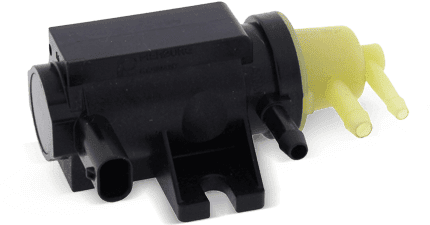
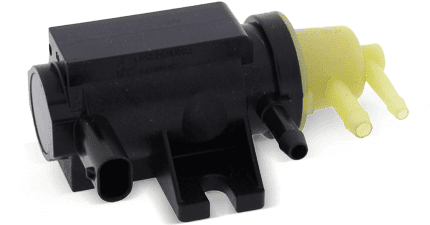
METZGER 0892213 Pressure Converter, exhaust controlOperating Mode: Electric-pneumatic; Valve Type: Solenoid Valve; Voltage [V]: 12; Version: OE; alternative item: 0892562; Supplementary Info: OE-PART; TecDoc Engine Number: 27472; Engine Code: M57 D30 TU, M47 D20 TU2 UL, M47 D20TU2 OL74,99 £*Shipping: 8,45 £Secure redirect to the provider


-
Why can't I equalize the pressure?
There are several reasons why you may be having difficulty equalizing pressure, such as congestion in your sinuses or Eustachian tubes, a blockage in your nasal passages, or not using the correct technique. It is important to address any underlying issues, such as allergies or sinus infections, before attempting to equalize pressure. It is also important to practice proper equalization techniques, such as yawning, swallowing, or the Valsalva maneuver, to help open the Eustachian tubes and allow for pressure equalization. If you continue to have difficulty equalizing pressure, it is recommended to consult with a healthcare professional for further evaluation and guidance. **
-
How can you equalize pressure with a diving mask?
To equalize pressure with a diving mask, you can perform the Valsalva maneuver by pinching your nostrils closed and gently blowing through your nose. This helps to equalize the pressure in your ears and mask as you descend underwater. Additionally, you can also tilt your head slightly upward and swallow to help equalize the pressure in your ears. It's important to equalize frequently and gently to avoid discomfort or injury while diving. **
-
How can you equalize the pressure without holding your nose?
You can equalize the pressure in your ears without holding your nose by using the Valsalva maneuver. To do this, gently blow out through your nose while keeping your mouth closed. This helps to open up the Eustachian tubes and equalize the pressure in your middle ear. It's important to do this gently to avoid causing any damage to your ears. You can also try swallowing, yawning, or chewing gum to help equalize the pressure. **
-
What happens if you don't equalize the pressure in the water?
If you don't equalize the pressure in the water, you may experience discomfort or pain in your ears and sinuses. This is because the pressure difference between the water and your body can cause your eardrums to bulge inward or outward, leading to discomfort or even injury. Additionally, not equalizing the pressure can also affect your ability to dive deeper as the increasing pressure can cause barotrauma, which can lead to serious ear and sinus injuries. Therefore, it is important to equalize the pressure in the water to avoid these potential issues. **

How does a converter or power converter work?
A converter or power converter is an electronic device that converts one form of electrical energy into another. It typically takes an input voltage and current and converts it into a different output voltage and current. This conversion is achieved through the use of electronic components such as diodes, capacitors, and transistors. The converter regulates the output voltage and current to meet the requirements of the connected load. **
Which voltage converter?
The best voltage converter to use depends on the specific devices you are trying to power and the countries you will be traveling to. For most electronic devices, a voltage converter that can handle a range of voltages (such as 100-240V) is recommended. Additionally, it is important to consider the wattage requirements of your devices to ensure the voltage converter can handle the power load. It is also a good idea to look for a converter that has built-in surge protection to safeguard your devices from power spikes. **
Top-Angebote
Products related to MAPCO-83666-Pressure-Converter:
-
Why can't I equalize pressure?
There are several reasons why you may have difficulty equalizing pressure, such as congestion in your sinuses or Eustachian tubes, a cold or allergies, or inflammation in the nasal passages. Additionally, if you are not equalizing properly during activities such as scuba diving or flying, it could be due to not using the correct techniques or not equalizing frequently enough. It is important to address the underlying cause of your difficulty in order to prevent discomfort or potential ear damage. **
-
How does a submarine equalize pressure?
A submarine equalizes pressure by adjusting the air pressure inside the vessel to match the external water pressure. This is typically done by using ballast tanks to control the submarine's buoyancy, allowing it to ascend or descend as needed. Additionally, the submarine may have airlocks that can be opened to allow water to enter or exit the vessel, helping to maintain equilibrium in pressure. By carefully managing these systems, the submarine can navigate safely at different depths without being crushed by the surrounding water pressure. **
-
Why can't I equalize the pressure?
There are several reasons why you may be having difficulty equalizing pressure, such as congestion in your sinuses or Eustachian tubes, a blockage in your nasal passages, or not using the correct technique. It is important to address any underlying issues, such as allergies or sinus infections, before attempting to equalize pressure. It is also important to practice proper equalization techniques, such as yawning, swallowing, or the Valsalva maneuver, to help open the Eustachian tubes and allow for pressure equalization. If you continue to have difficulty equalizing pressure, it is recommended to consult with a healthcare professional for further evaluation and guidance. **
-
How can you equalize pressure with a diving mask?
To equalize pressure with a diving mask, you can perform the Valsalva maneuver by pinching your nostrils closed and gently blowing through your nose. This helps to equalize the pressure in your ears and mask as you descend underwater. Additionally, you can also tilt your head slightly upward and swallow to help equalize the pressure in your ears. It's important to equalize frequently and gently to avoid discomfort or injury while diving. **
Similar search terms for MAPCO-83666-Pressure-Converter
-
SenCom 5030130 Pressure Converter, exhaust controlNumber of circuits: 2; Cable Length [mm]: 250; Cable Cross Section [mm²]: 0,75; Connector Shape: angular; Plug Type: Shrink Connector; Cable insulation material: Silicone; Material: CuSn (copper-tin)17,49 £*Shipping: 8,45 £Secure redirect to the provider
-
METZGER 0892213 Pressure Converter, exhaust controlOperating Mode: Electric-pneumatic; Valve Type: Solenoid Valve; Voltage [V]: 12; Version: OE; alternative item: 0892562; Supplementary Info: OE-PART; TecDoc Engine Number: 27472; Engine Code: M57 D30 TU, M47 D20 TU2 UL, M47 D20TU2 OL74,99 £*Shipping: 8,45 £Secure redirect to the provider
-
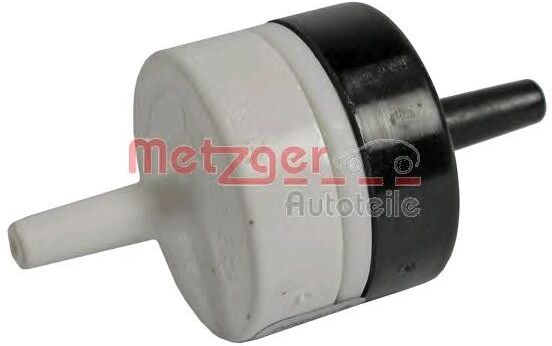
METZGER 0892222 Pressure Converter, exhaust controlOperating Mode: pneumatic; Valve Type: Non-Return Valve; for OE number: 046905291A; Supplementary Info: OE-PART; TecDoc PC Type Number: 18225, 18226, 18400, 18411, 19970, 19971, 19798, 19171, 19799, 29978, 5600, 13202, 13199, 10410, 7930, 34940, 12075, 9335, 29290, 4649, 4641, 3894, 5126, 5127, 3893, 5606, 5311, 5125, 5605, 8318, 8939, 7905, 7893, 7897, 8831, 8433, 7378, 8319, 8947, 8817, 8948, 7742, 8828, 8886, 8893, 8894, 8887, 5603, 13162, 10050, 5675, 14940, 15964, 14585, 14587, 14586, 14588, 14772, 15611, 15612, 12101, 15511, 16603, 16602, 16049, 16010, 16184, 17300, 15725, 16180, 11352, 11351, 15899, 7909, 9518, 9519, 9063, 16294, 16295, 5310, 4618, 16601, 16261, 16885, 16983, 16882, 17306, 18402, 18413, 17273, 17008, 14402, 19850, 19172, 19848, 17920, 18764, 18005, 18412, 18376, 18418, 17896, 19849, 18375, 19232, 19233, 18377, 21322, 18414, 28165, 28017, 18674, 19846, 19847, 19488, 19621, 19016, 19278, 20003, 21589, 22558, 22550, 23302, 30008, 22551, 25509, 23303, 23293, 23294, 19844, 19843, 19842, 19845, 26547, 26548, 27326, 28568, 26555, 26553, 26554, 26556, 29976, 26852, 25455, 18757, 26563, 9337, 31430, 33432, 17577, 18070, 19454, 19807, 22552, 22549, 33658, 33659; TecDoc Engine Number: 17596, 20492, 18010, 20672, 11588, 24759, 24960, 25667, 25666, 25665, 13275, 16201, 27525, 245, 16413, 228, 4202, 13774, 11595, 14911, 9371, 15354, 9517, 11356, 5531, 23884, 16090, 17910, 16091, 22660, 13272, 12512, 13273, 11527, 15989, 15344, 17157, 15312, 17033, 14912, 20515, 15377, 15348, 16133, 15768, 16028, 16518, 18239, 16403, 16404, 16859, 16860, 16858, 17037, 16463, 17030, 17377, 18029, 17336, 17350, 18009, 18748, 18027, 18192, 20625, 17337, 18996, 19091, 18926, 18992, 20402, 19317, 19881, 21315, 20006, 20007, 19883, 20205, 20206, 20599, 20496, 20529, 20709, 21316, 20497, 18030, 23106, 24958, 23974, 17068, 17407, 19200, 20601, 19876, 24142, 25430, 19821, 21734, 21735, 20842, 22470, 24962, 23089, 242; Vehicle Equipment: for vehicles with manual transmission; Construction Year to: 11/200816,49 £*Shipping: 8,45 £Secure redirect to the provider
-
ENGITECH ENT840005 Pressure Converter, exhaust controlOperating Mode: Electric; Voltage [V]: 12; TecDoc Engine Number: 18083, 28310, 26641, 24890, 26642, 23652, 18081, 18146, 18082, 20350, 19202, 19193, 21837, 20157, 22595, 24817, 23883, 35048, 24004; Model Year to: 2011; Model Year from: 2006, 2010; TecDoc PC Type Number: 17169, 17208, 17500, 17651, 19138, 19141, 19144, 20011, 20012, 20013, 20108, 23276, 25500, 59260, 19092, 19137, 19140, 19143, 19110, 23252, 23259, 23253, 23254, 23260, 17381, 17594, 17595, 18162, 23190, 24481, 28217, 28224, 29926, 28612, 29935, 29940, 32069, 32070, 32071, 33745, 33746, 3374716,99 £*Shipping: 8,45 £Secure redirect to the provider
-
How can you equalize the pressure without holding your nose?
You can equalize the pressure in your ears without holding your nose by using the Valsalva maneuver. To do this, gently blow out through your nose while keeping your mouth closed. This helps to open up the Eustachian tubes and equalize the pressure in your middle ear. It's important to do this gently to avoid causing any damage to your ears. You can also try swallowing, yawning, or chewing gum to help equalize the pressure. **
-
What happens if you don't equalize the pressure in the water?
If you don't equalize the pressure in the water, you may experience discomfort or pain in your ears and sinuses. This is because the pressure difference between the water and your body can cause your eardrums to bulge inward or outward, leading to discomfort or even injury. Additionally, not equalizing the pressure can also affect your ability to dive deeper as the increasing pressure can cause barotrauma, which can lead to serious ear and sinus injuries. Therefore, it is important to equalize the pressure in the water to avoid these potential issues. **
-
How does a converter or power converter work?
A converter or power converter is an electronic device that converts one form of electrical energy into another. It typically takes an input voltage and current and converts it into a different output voltage and current. This conversion is achieved through the use of electronic components such as diodes, capacitors, and transistors. The converter regulates the output voltage and current to meet the requirements of the connected load. **
-
Which voltage converter?
The best voltage converter to use depends on the specific devices you are trying to power and the countries you will be traveling to. For most electronic devices, a voltage converter that can handle a range of voltages (such as 100-240V) is recommended. Additionally, it is important to consider the wattage requirements of your devices to ensure the voltage converter can handle the power load. It is also a good idea to look for a converter that has built-in surge protection to safeguard your devices from power spikes. **
* All prices are inclusive of VAT and, if applicable, plus shipping costs. The offer information is based on the details provided by the respective shop and is updated through automated processes. Real-time updates do not occur, so deviations can occur in individual cases. ** Note: Parts of this content were created by AI.